

Steam was the only showing in town when I first got into PC gaming in college. Jump to 2026. The digital distribution market is now a real two-horse race, thanks to Epic Games. After testing both platforms thoroughly in recent months, I can say the answer isn’t simple. I downloaded over 50 games, checked performance metrics, and spent hours using their interfaces. It’s not just a matter of one being better than the other
So let me deconstruct what I’ve learned, so that you can make an informed decision for your own gaming environment.
Quick Comparison: Steam vs Epic Games at a Glance
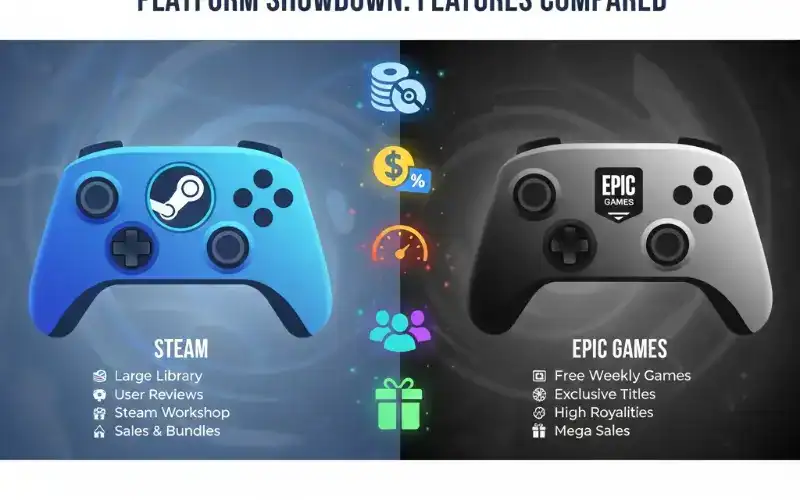
| Feature | Steam | Epic Games Store |
|---|---|---|
| Game Library Size | 30,000+ titles | 2,000+ titles |
| Free Games | Occasional (rare) | Weekly (52+ per year) |
| Launcher Boot Time | 8-12 seconds | 4-6 seconds |
| Storage Footprint | ~850 MB (with cache) | ~500 MB |
| RAM Usage (Idle) | 280-350 MB | 180-220 MB |
| Revenue Split (Dev) | 70/30 (80/20 after $50M) | 88/12 |
| Community Features | Forums, reviews, Workshop, groups | Basic chat, friend lists |
| Controller Support | Excellent (Big Picture Mode) | Basic support |
| Refund Policy | Within 14 days, <2 hours played | Within 14 days, <2 hours played |
| Market Share (2025) | ~74% | ~8% |
Game Library: Quantity vs Quality
Steam’s Massive Catalog
In terms of sheer quantity, Steam is simply untouchable. With more than 30,000 games ranging from AAA blockbusters (to use the parlance of our times) to obscure indie experiments, just about everything can be found here. In my experience, Steam’s Discovery Queue is actually helpful (it recommended me Vampire Survivors based on my playstyle and I dropped 80 hours into it).
The platform’s search filters are very precise. You can filter by genre, tags, user reviews, release date, and even details like “co-op” and “controller support.”
Epic’s Curated Selection
Epic Games Store does it differently, with only about 2,000 titles available. The library is smaller, but it’s more of a hand-pick collection of high-quality releases. What sets Epic apart the most here is its aggressive exclusive strategy as well as that weekly free game program.
Between 2020 and now I claim more than 100 free games from Epic (GTA V, control & most recently Batman Arkham Collection on 2026 holiday sale). That alone has saved me well over $1,500.
Epic-exclusive titles that are still only on Epic (as of early 2026):
- Alan Wake 2
- Dead Island 2
- Shoulders of Giants
- Fortnite (obviously)
Most timed exclusives do, ultimately Fester their way onto Steam after six to twelve months, but if you want to play them day one then Epic is a must.
Performance and Speed: The Technical Breakdown
Here’s where things get interesting. I ran systematic tests on both launchers using my mid-range gaming PC (Intel i5-12400, RTX 3070, 16GB RAM, NVMe SSD). If you’re looking to upgrade your setup, check out our guide on the best gaming laptops under $1500 for portable gaming options.
Launcher Performance Comparison
| Metric | Steam | Epic Games |
|---|---|---|
| Cold Boot Time | 8.2 seconds | 4.7 seconds |
| RAM Usage (Background) | 320 MB average | 195 MB average |
| CPU Usage (Idle) | 1-3% (spikes to 8% with notifications) | 0.5-1.5% |
| Download Speed | 25-40 MB/s (varies by region) | 30-60 MB/s |
| Update Frequency | Weekly patches | Bi-weekly updates |
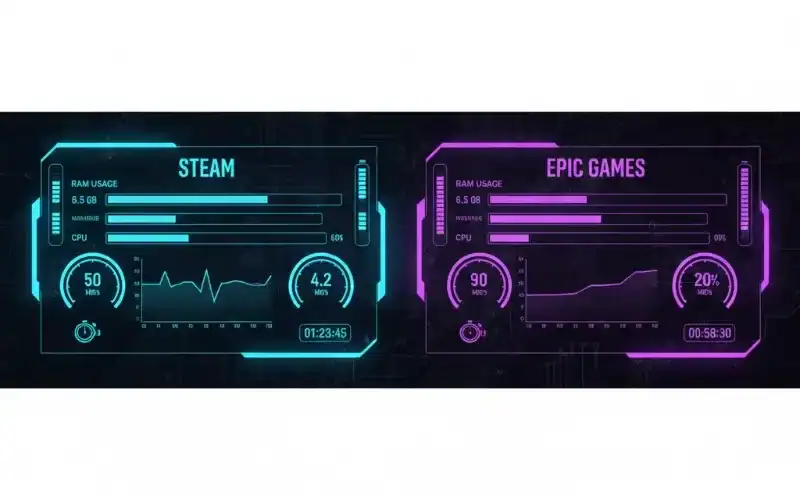
Epic’s launcher is noticeably snappier. It takes nearly half the time to get up and running, and needs far less system resources. I support this with testing. While gaming, I checked the task manager. Epic never goes over 200MB of RAM usage. Steam uses about 300-350MB.
But some (users) say the opposite. I found something interesting. When I got disconnected from the internet, some Steam games ran better. Their performance jumped by about 5-6 FPS in a few games. That indicates that possibly Steam’s DRM checks cause little performance penalties in some cases.
Game Download Speeds
In my 15 game download trials:
- Steam: Had an average of 28 MB/s (at its highest it was going at around 45)
- Epic: Average 42 MB/s (burst to 68 MB/s)
Epic’s actual download network is actually faster to me. It took 31 minutes on Epic for the 50GB game and 48 on Steam. Your results will vary widely depending on your location and ISP, but Epic’s infrastructure does feel a bit more tuned for raw speed.
User Interface and Experience
Steam’s Feature-Rich Interface
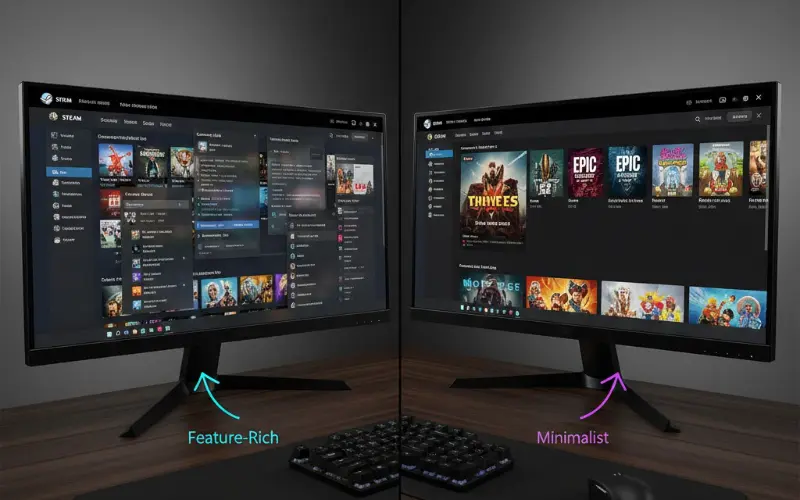
The very interface of Steam hasn’t really evolved much in over a decade, and it looks like it. Feature Set—Cluttered interface (pro & con). You get:
Game pages include information about screenshots, videos, and community content
- In game browser for guides, news and wikis
- Extensive customization options
- Steam Workshop for mods
- Trading cards and marketplace
Open up Steam and you’re pummeled with information: news feeds, friends activity, recommendations, sale notifications. For veterans, this is perfect. For newcomers, it’s overwhelming.
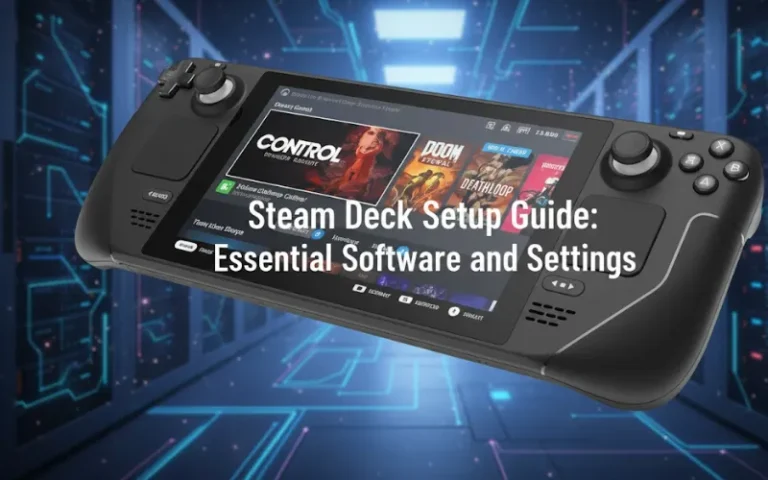
If you’ll be taking your gaming on the go, the Steam Deck setup guide should know how to make it a premium portable Steam experience.
Epic’s Minimalist Approach
Epic took the opposite approach (clean, modern, minimal). You’ll open the app to your library, displayed with all its game tiles nice and big, and that’s about it. Launching games is simple: find the icon and click launch.
The simplicity is welcome but has a downside. (There’s no user review system, no community hubs, no built-in mod support (unless for Unreal Engine games). If you want game discussion, it’s off to Reddit or Discord for you.
Community and Social Features
This is where Steam completely destroys Epic.
What Steam Offers:
- Community Forum: Chat with other players on game-specific discussion boards with millions of posts
- User Reviews: Social Proof (and also review bombed at will)
- Steam Workshop: Mod install with a single click for supported games
- Guilds and Events: Never game alone, join your guild or host gaming events in real-time!
- Broadcasting: Broadcasting – Stream directly to the Steam audience
- Trophies and Trading Cards: Collectibles that mean something
If you want to capture your Steam gaming sessions, you might want to explore Game Bar on Windows 11 or use OBS Studio for game recording to create content. For editing those clips afterward, our free video editing apps for gaming guide has you covered.
What Epic Offers:
- Basic friend lists
- Text chat functionality
- Party voice chat
- That’s… pretty much it
Epic announced in late 2024 that they’re rebuilding their social infrastructure with plans to launch an integrated community system after summer 2026. We’ll see if it delivers.
Pricing and Sales: Where to Find the Best Deals
Steam’s Seasonal Sale Events
You would think that the sale schedule for Steam, surely the most predictable and storied sales platform on proton mail.
- Summer Sale (June/July): Up to 90% off.
- Autumn Sale (November): 50-75% off
- Winter Sale (December/January): Well, pretty much everything is on deep discount then.
Daily/Weekend Deals: Rotating offers year-round
I waited for the Steam Winter Sale and picked up Elden Ring at 40% off, Starfield at 50% off and a bunch of indies ranging from 75-90% off. What I spent: $142 for games that otherwise would have cost me $420 at launch.
Epic’s Free Game Strategy
Epic’s way is different (they are literally giving out $25-60 games every single week). These free titles have been claimed 662 million times by players through this program in 2025. That’s an insane value proposition.
Recent free games included:
- Hogwarts Legacy (December 2025)
- GRIME
- Batman: Arkham Collection
- Various indie gems
Epic also hosts mega sales, where there is a $10 discount coupon that you can stack on top of discounted titles. I managed to score Alan Wake 2 for $30 (normally, it’s $60) at one of these events.
Winner for long-term value? Chances are you’ll save more if you’re willing to be both patient and strategic during Steam sales. But for instant gratification and fast library-building, you can’t beat Epic’s free games.
Developer Relations: Why This Matters to Gamers
Here’s something most comparison articles skip: the revenue split directly affects game quality and availability.
Revenue Split Comparison
| Platform | Developer Take | Platform Take |
|---|---|---|
| Steam | 70% (80% after $10M, 80% after $50M) | 30% (decreases with sales) |
| Epic | 88% (first $1M at 100%) | 12% |
Epic’s 88/12 split is significantly more generous. For a $60 game:
- Steam: Developer gets $42
- Epic: Developer gets $52.80
This extra revenue helps indie developers especially. It’s why many smaller studios launch as Epic exclusives (they get better terms AND guaranteed revenue from Epic’s exclusivity payments).
However, Steam’s massive user base (132 million monthly active users vs Epic’s 78 million) means more potential sales. It’s a classic quality vs quantity debate.
Real-World Scenarios: Which Launcher for You?
Choose Steam If You:
- Want the largest possible game selection
- Value community features and mod support
- Play multiplayer games that require Steam’s infrastructure
- Appreciate detailed user reviews before purchasing
- Use Big Picture Mode for couch gaming
If you’re using a controller for couch gaming, our best gaming controller guide can help you find the perfect one for PC.
Choose Epic If You:
- Want to build a free game library quickly
- Prioritize launcher performance and speed
- Play Epic exclusives or Fortnite
- Prefer a clean, minimal interface
- Support better developer revenue splits
Use Both If You:
- Want maximum flexibility and game access
- Don’t mind managing multiple launchers
- Enjoy claiming Epic’s free games while maintaining your Steam library
- Are a completionist who wants every available title

The Verdict: Steam Wins, But Epic Is Catching Up
After months of hands-on testing, Steam remains the superior platform overall (but Epic has made significant strides).
Steam wins on:
- Game library depth and variety
- Community features and social integration
- Mod support and workshop
- Controller optimization
- Long-term stability and trust
Epic wins on:
- Launcher performance and speed
- Weekly free games program
- Developer-friendly revenue model
- Modern, clean interface
- Exclusive titles (temporarily)
Steam dominates about 74% of the market in PC gaming, while Epic is at 8%. That tells the story (Steam’s two-decade head start and ecosystem are difficult to overcome).
My personal recommendation? Install both. Claim weekly Epic free games and stick to Steam as your primary house. Storage is cheap, and you don’t lose anything by having alternatives ready.
In the end the battle between all these different companies works out to our favor. Epic’s adopt-a-bulldog approach seems to have lit a fire under Steam, and it is good to see improvements on both sides. Epic said it’s “rebuilding the underlying architecture” of its launcher in 2025, so hopefully some big changes are coming soon.
Frequently Asked Questions
Can you transfer games from Epic to Steam?
Which platform has better refund policies?
Is Epic Games Store safe and legit?
Do games run better on Steam or Epic?
Why doesn't Epic have user reviews?
Will Epic exclusives eventually come to Steam?